Checquy Court
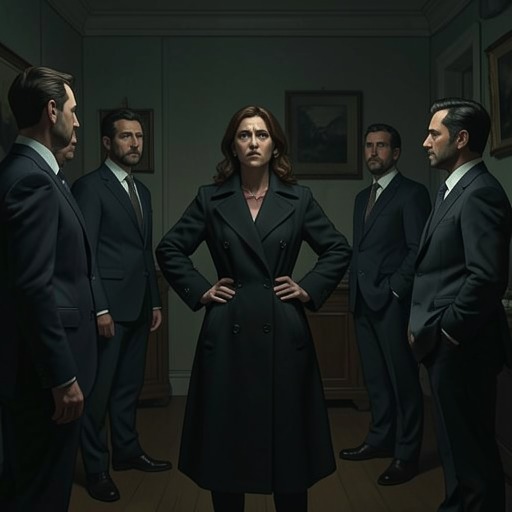
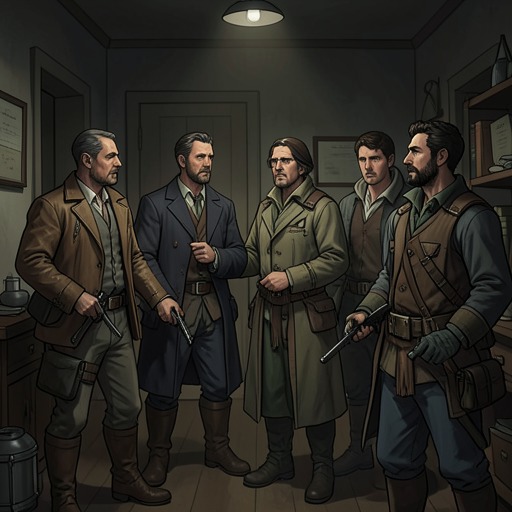
The RookThe Checquy Court is the executive council that oversees the Checquy Group, the secret organization charged with responding to supernatural threats in Britain. Its members occupy the highest offices in a chess-based hierarchy, and their reach extends across domestic and foreign operations, finance, intelligence, recruitment, and crisis decisions. The Court’s authority protects the country while also placing extraordinary power in a small circle whose members can become suspects when that power is turned inward.
Identity and Structure
The Court of the Checquy is the organization’s ruling circle, with responsibility for overseeing the whole Group. The hierarchy follows the familiar chess pieces: Rooks manage domestic operations and are based at the Rookery; Chevaliers direct foreign operations from the Annexe; Bishops supervise the organization and serve as aides to its heads at Apex House; and the Lord and Lady head the Checquy from Apex House. The Court’s offices therefore divide responsibilities geographically and functionally, while the council as a whole remains the executive center.
Apex House is more than a meeting place. The crescent-shaped headquarters houses the Lord, Lady, and Bishops, along with much of the organization’s legal and financial apparatus. The Court meets there every Friday to coordinate departmental work. The office flash cards kept in a senior officer’s desk reduce the membership to names and posts, a practical reminder that the institution depends on defined responsibilities as well as personal authority.
Membership is restricted by long-standing tradition and policy: non-powered Checquy employees cannot sit on the Court, even though the organization depends on highly capable people without supernatural abilities. The narrator, Myfanwy Alice Thomas, explicitly regards those employees as equally valuable, but recognizes that the Court’s membership rules reserve its ruling offices for powered members. The council thus embodies a distinction between the broad workforce that sustains the organization and the narrower group permitted to govern it.
Authority and Institutional Work
The Court’s power is rooted in its command of several systems at once. Myfanwy observes that an operation to acquire and train children with abilities could not be launched without a Court member: only the eight members she identifies as the Court possess the necessary combination of financial access, recruitment authority, and control over relevant resources. Her search through the records finds reports forwarded to a figure called the Founder, but no explanation of the Founder’s identity. The absence of a named Court member does not resolve who controls the operation; instead, it sharpens the question of how authority is being exercised and concealed.
The organization’s extensive administrative machinery supplies the Court with information. Analysts sift through stacks of reports, figures, and files for patterns that might reveal a supernatural threat, such as a vampire manipulating the wheat market. The Checquy also receives information through Panic Lines: high-ranking officials in national and local government are discreetly briefed in language designed to be specific enough to prompt action without openly describing supernatural phenomena. Calls from police chiefs, ministers, military officers, intelligence agents, medical personnel, and others then feed information back to the organization, alongside reports from Checquy personnel placed in key institutions.
That network is designed to preserve secrecy as carefully as it gathers intelligence. The Checquy’s name does not appear on external paperwork, few people outside the organization know it exists, and information reaches it through indirect channels. Its computer network is disconnected from external systems. The result is a governing body supported by a dense flow of reports and contacts, yet hidden from ordinary public scrutiny. Information is both the Court’s instrument of protection and one of the principal things it must keep under control.
Membership, Recruitment, and the Question of Consent
The Court governs an organization made up of hundreds of people, some powered and others recruited for exceptional professional skill. The Checquy has long held authority to claim citizens it wants; its methods include pressuring or deceiving parents into releasing children, sometimes with substantial payments, and attracting adults with promises of power, wealth, and national service. Initiation combines ancient oaths with modern contracts under official and unofficial secrecy laws. By full membership, an individual is bound by an extensive web of obligations.
The institution’s claims to its members are reflected in its treatment of their bodies and abilities. At the Estate, pupils undergo monthly medical examinations as staff try to trace the causes of their powers, even when those causes remain beyond the researchers’ understanding. The medical program records and stockpiles data in the hope that future Checquy personnel will be able to interpret it. Myfanwy’s own initial assessment includes extensive tests and identification procedures, alongside interventions intended to prepare her for the organization’s expectations. These practices make the Checquy’s protective mission inseparable from its efforts to classify, monitor, and shape the people it recruits.
Myfanwy’s career offers a pointed exception to the expectation that Court members rise through conspicuous field achievements. The Group initially imagined she might serve as an international spy, but she was shy, unsuited to aggressive operations, and became violently ill on planes. Because she remained too valuable to dismiss, she instead became an in-house operative. Her administrative ability and skill with numbers made her exceptionally useful, and her Court position came through bureaucratic work rather than celebrated action in the field. Her route to power reveals that the Court’s practical needs can make room for capacities the institution’s heroic self-image might overlook.
Operations and Collective Decisions
The Court’s authority becomes visible when departments must coordinate. During one response, Sir Henry Wattleman assigns the Rooks and Chevaliers to work together and present their conclusions to the Bishops the following evening. The exchange shows a chain of responsibility: operational branches investigate, senior supervisors receive their findings, and the heads of the organization remain above the immediate work. Wattleman’s joking reference to being woken if an invasion occurs underscores the gap between the lightness of the meeting’s tone and the gravity of the powers the Court directs.
The domestic Rooks also command four of the ten Barghest teams, used as heavy support when local forces cannot handle a crisis in Britain. The Chevaliers command the other six teams, stationed in Canada, New Zealand, India, and Australia. This division links the Court’s chess offices to a concrete operational structure: foreign deployments fall under the Chevaliers, while the Rooks oversee the British teams. The arrangement makes the Court’s hierarchy more than ceremonial; it determines who can mobilize specialized force and where.
Coordination does not eliminate the burden of procedure. After a crisis, personnel describe evacuating streets and working with local police to preserve discretion, invoking standard operating procedure as the basis for their actions. In another instance, Rook Thomas is asked to assess an update from the Rookery concerning the analysis of chanting. Such details show a council whose work depends on reports moving between sites and ranks, rather than on a single dramatic command from Apex House.
The Court also operates within obligations extending beyond Britain. The Checquy and the American organization Croatoan maintained regular contact despite their formal separation, and in 1850 they codified their relationship in the Sororitas Pact. The agreement established a shared List of grave threats, required immediate communication about developments involving those threats, provided for extradition of transgressors, and promised that neither organization would consent to take part in a war against the other’s country. The Court’s sphere of responsibility therefore includes not only internal command but diplomacy, information-sharing, and limits on conflict with a counterpart across the ocean.
Crisis, Suspicion, and the Court’s Limits
The Court’s concentration of authority becomes dangerous when members themselves are suspected of betrayal. After a psychic confirms that one of the other Court members may be trying to kill Myfanwy, she understands that the threat is located at the organization’s summit. Later, while investigating an unauthorized operation involving children, she finds no Court member named in the records, despite concluding that the operation requires powers only the Court possesses. The council’s control of finance, recruitment, and institutional access creates a dilemma: the same evidence that points toward elite involvement does not identify the person responsible.
The reception crisis involving Rook Gestalt sharpens that dilemma. Myfanwy argues that the armed men at the event do not look like a credible force capable of taking over the Court; to her, their weapons are inadequate for a genuine coup against the institution’s powerful senior officers. She instead concludes that the attack occurred because she exposed Gestalt, suggesting that the violence was a consequence of revelation rather than the planned opening of a conventional putsch. The distinction matters: the Court is threatened not only by an external assault but by the internal exposure of an infiltrator.
The response to Gestalt also illustrates how the Court handles conflicts of rank and accountability. There is to be no trial, because Gestalt has not claimed innocence and the attempt to kill those at the reception is treated as sufficient proof of guilt. Myfanwy speaks with Sir Henry Wattleman and Lady Linda Farrier, who agree that she should not supervise the interrogation because she and Gestalt hold the same rank. Responsibility passes to the Bishops, while Myfanwy contributes ideas intended to secure cooperation. The transfer respects an institutional boundary, even as the account leaves the interrogation in the hands of senior officials whose authority and methods are themselves consequential.
The Court’s structure therefore contains both checks and vulnerabilities. Divided offices, reporting chains, and rank distinctions organize its work, but they do not make the ruling circle immune to deception or conflict. Indeed, the need to screen personnel after Grafter infiltration requires an unusually intrusive process: examinations are conducted in-house, observers monitor the examiners, and every verdict must be agreed upon by Checquy doctors and a randomly selected civilian practitioner. The safeguard reveals the cost of lost trust: the institution must investigate its own medical staff while relying on a wider network of reviewers to make the results credible.
Narrative Significance
The Checquy Court stands at the intersection of public protection and secret government. It coordinates a large organization, manages intelligence that ordinary institutions cannot openly process, and directs operations ranging from domestic emergency response to international deployments. Yet its secrecy, recruitment powers, and monopoly over senior offices also mean that the people it protects cannot easily see or contest how its authority works.
Myfanwy’s experience makes that institutional tension personal. She reaches the Court through administrative competence rather than field heroics, respects non-powered colleagues whom the rules exclude from the ruling circle, and then discovers that membership at the top does not guarantee safety from the other members. The Court is at once a working council, an apparatus for governing extraordinary people, and the setting of a betrayal crisis. Its central contradiction is that the institution must concentrate power to defend a hidden world, while that same concentration makes the identity and intentions of its own leaders difficult to scrutinize.